Thursday, December 6, 2012

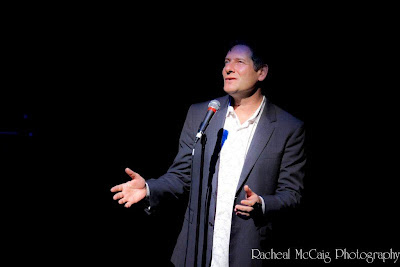
SINGERS PLAYGROUND IN CONCERT


Although a regular event in the calendar when Singers Playground started in Los Angeles this is the first event of it's kind for us in Canada and I'm very proud to be presenting this crop of musical artist to the audience at Hughes Room, one of the nations top concert clubs.
       I chose the up and coming artists on this first Singers Playground concert very carefully and with specific criteria. Firstly they had to be working at a level that would represent the work I do at Singers Playground, including high calibre songwriting, powerful vocal and performance abilities, and a real passion to share their gifts with the world.
     Secondly they had to have been performing out in the world with enough stage experience that they could excel in the concert atmosphere of Hughes Room which is really and truly a "listening room" where musicians and industry gather to hear the best and the brightest.
    Thirdly they have to have been working with me for an extended length of time, enough that I have seen each singer dig into themselves to find the best possible result. Artists have to find the courage to face their weaknesses and deal with them head on.
Singers Playground is all about creating an atmosphere of challenge and I have a high level of expectation for the artists who I work with. My vision for this concert is no different. In fact I am challenging myself to perform new material for an upcoming recording some of which will be heard for the first time at the show. After all if the coach isn't challenging himself then how can he challenge his clients to grow?


Wednesday, September 5, 2012

"5 Tips on Becoming A Better Singer" (from former Nylons vocalist Micah Barnes)


Hi Folks! As I prepare for the TAKE THE STAGE WORKSHOP Sept 8th at The West End Cultural Centre in Winnipeg I've jotted down 5 of the most important things to keep in mind as you work at becoming a better singer. (info on Saturdays workshop below)

 Tip #1   Your job as a singer isn't to impress anybody with your voice but instead to make a powerful relationship with your audience. We're not interested in notes or lung power we want to get to know the singer as a person. If you are really and truly in an intimate personal place with your audience they will be yours for the rest of your career.

Tip #2  Know your material well enough that you can really inhabit it onstage or in the studio.
Don't just memorize lyrics, really take the time to understand where the song lives in your own experience. If you can personalize and experience the emotional life of your material while you are singing then I guarantee your audience will come along for the ride.

Tip #3  Know what keys and kind of material suits your voice best and stick with what works best for you when the pressure is on.  If you aren't sure what you sound best singing ask your closest friends for their input. Certain voices lend themselves better to certain styles and if you are armed with that knowledge you can put your best foot forward when important folks are listening.


Tip #4 Don't be afraid to ask questions and take advise career wise. No artist can be knowledgable about everything in their career. It takes a village of support to make any real success story, so don't get stuck because you're not sure how to go about the next steps. Ask everyone you can and be willing to reach outside of your comfort zones to get the results you are looking for. Being willing to risk is a singers greatest asset.

Tip #5  Breath is always the answer.  The most important secret to being a  good singer is in working your breathing.  If you can breath without tension then there will be no "difficult" note or song that will escape your ability to sing it.

Cant wait to work with everyone at Saturdays workshop in Winnipeg!

Click here for Information about Saturdays  Take The Stage: Singers Performance Workshop

Learn more about Micah's coaching on Singers Playground Website

Join our  Singers Playground Face Book Group to learn about upcoming workshops etc.

cheers!
Micah Barnes
micah@singersplayground.com


Friday, August 24, 2012

On Becoming A Coach Part 2 The Nylons and Los Angeles


                                          Billy Newton Davis, Micah Barnes Claude Morrison

  My years of singing with The Nylons and the heavy demands of the gig, ( concert tours, TV specials, constant interviews, tons of air travel), all meant a break from coaching, but during those years, influenced by my fellow Nylons, I began to take my own technique more seriously.
      Although hired to sing the Baritone part, I soon discovered during those "boot camp" rehearsal weeks of learning to sing harmony while dancing choreography, (not as easy as they made it look!), that I was also going to need to be able to sing falsetto, tenor AND bass parts, depending on which Nylons was stepping forward to sing lead! YIKES!
All of this range stretching taught me both to value and lean heavily on my technique... and I really value the wonderful producers and vocal coaches who helped me put together a more flexible voice during those years.
   
   It was in the highly competitive music world of Los Angeles where I moved post Nylons that I began to focus on my coaching as a real career.
          I had a few signs that this would be a viable direction along the way, vocal coach Seth Riggs had told me I was well trained enough to teach his technique and after years of performing and recording I had faced enough practical challenges as a singer to feel I had something useful to pass along to my students.
A key factor in my growth as a coach was a client that challenged my abilities and helped me grow my skill set..more about that and the surprise opportunity that turned out to be a career changer in Part 3

Sunday, August 19, 2012

On Becoming A Coach: Part One


People have been asking recently how I got started in the coaching biz.
It seems, on the eve of taking the Singers Playground workshops national, (Winnipeg, Toronto, Halifax and Vancouver!), to be a good moment to look back at how this all got started.

   
                                                 Private  Coaching Studio in Los Angeles

   Frankly, I started teaching voice technique because the actors singing my score in theatre productions weren't skilled enough to pull them off (and I wanted help my compositions to be heard! A very selfish reason when you think about it).

        I asked the actors to informally come by my apartment on Spadina Ave. in Toronto for me to show them a few things… And the miracle would happen that I was somehow able to free their minds and bodies enough to let a better sound happen for them on stage.

Luckily for me because due to early success with theatre and film actors, I began to coach productions, (including the original touring production of "The Rez Sisters"). That started actors seeing me before singing auditions and a kind of reputation as a "useful" coach began.

                              While coaching on CBC's "How To Solve A Problem Like Maria"

 For many of the early years I thought of my teaching as a way to pay the rent, without a real professional focus, as is the case with many coaches..(which is why I always suggest singers interview many coaches before settling on someone to work with)....

....... but over time I came to see which methods worked best, both in terms of teaching actual technique and most importantly how to find the most effective ways of communicating until the singer opened up to the work and began to find their sound.
 I seemed to have an instinct and a knack for getting through to even the most fearful and blocked singers, something which I would expand upon later in my coaching career.

Up next in Part Two: Vocal Coaching and The Nylons!

For info on national workshops please log onto http://www.singersplayground.com
and stay current with us at http://www.facebook.com/groups/singersplayground
   

Saturday, July 7, 2012

On Courage


Who we are as people is revealed when we open our mouths to sing.
Our truth is apparent. If we are fearful and hiding behind a mask that is clear to an audience (consciously or unconsciously), and they respond accordingly.
A voice carries a person's true self to the listener.  Think of your favorite artists. Theres a pretty good chance you feel a personal connection to them and have a sense of who they really are.
As artists are we increasing our comfort level at being our true selves?

Courage is A Muscle.

It takes courage to be ourselves in the world let alone on stage.
It takes courage to write a song and present to an audience, to step into a studio and create a recording. The courage to "be" who we are at our core and not just who we would like the audience to think we are.
The more we practice using this muscle the easier it gets to allow the vulnerable imperfect self to simply "be" present without artifice.

Courage must become a Habit.

We are creatures of habit.  If our habit in life is to play a role for approval that will surface on stage and our true self will remain hidden. That fake "performer personality" will be all the audience gets to know of us. They may be entertained in the moment but will they be fed? Sustained? Loved? Given any real truth about life?

Making a New Habit

Being honest in daily life is where we start. Think of all your relationships, especially the intimate ones. Are you pretending or manipulating the truth in order to be loved?
Revealing ourselves without fear of judgement is easier said than done. It's a life times work for some of us (myself included).

Creating an inner sense of self assured peace is the starting place for a singer.  Our fears will still be there but our courage must be large enough to overcome our insecurities…and allow us to "be" who we really are.

 Our truth is what powerful artists carry into the room and onto the stage.


Thursday, May 10, 2012

Songwriting Part 4 Listening to "Source" Music" While Songwriting


              When I am digging in during a creative period of songwriting what I input becomes important. What books I read, which movies I watch, and most importantly the music I listen to all have impact on opening the doors to creativity and I do find myself seeking a certain kind of listening experience. 

         Because my own music sticks closely to the Jazz, Blues Classic R&B and Brill Building Pop tunes these days I don't have to catch up on the latest radio or club sounds in order to feel up to date. (what a relief!) The music I make is all about lyric and the singing voice and telling a story with as much authentic emotional truth as possible. Thats why I find myself happiest when listening to what I call "source music".
                                 
                                           WHAT IS "SOURCE MUSIC"?

  Historically there are certain artists who helped define a sound early in the development of a genre. It is with them that I like to hang out when I am opening to the possibilities in my writing. Say Hank Williams for instance. The width and breadth of his abilities helped define what recorded commercial country music as a genre would one day become. His work was rooted in the Blues and Gospel and Folk Idioms of poor folks and designed for both Saturday night dancing and the Sunday prayer meeting. From "Im so Lonesome I Could Cry", to "Honky Tonkin'" to "I Saw The Light"
One simple little ditty of Hank's can pull us into the complex world of human experience, our wants and needs and fears so completely that they can feel like contemporary statements.
 (I also find Johnny Cash clears up my thinking and gets rid of the excess need to be clever.)

   The Blues is such an important touchstone to all of rock n roll and R & B based pop and I find myself returning time and time again to the great pioneers like Robert Johnson whose tiny output of recordings made during his short life have actually effected the way we hear and experience music for all time. Likewise the powerfully constructed Chess recordings of Muddy Waters whose sound was built more for the bar room and juke box and helped create all that we think of as contemporary music.

Keeping my listening habits simple and truthful seems to help me be all the more honest and emotional direct in my work. Of course I never fail to keep the triumvirate of writing gods Leonard, Joni and Dylan close at hand as well.
There's nothing like inspiration from the highest mountain to help keep our eyes on the prize…creating work that is the very highest calibre we are capable of right?
 
                                                   What is your "Source Music" ?

Friday, April 13, 2012

SONGWRITING PART 3 : Some Keys To The Kingdom


Some important things to keep in mind as you start the journey to become a songwriter.

YOUR PERSPECTIVE IS ESSENTIAL.
Although feelings tend to be where most songs start out, feelings aren't enough to make a good song happen.
Good songwriting joins a strong emotion with a unique idea or perspective on the emotional situation. Once you have that worked out your songs perspective on the situation presented in your material then your song has been born.

FORGET ABOUT BEING CLEVER. BE HONEST.
A word of advice to the fledgling songwriter.
Try making being honest rather than clever as your goal.
Being clever is for beginners. When we start we are up in our heads trying to figure out how to be unique.
But using complex language or ideas for the sake of being smart isn't what music is about. GREAT writer/artists like Dylan or Joni started out real simple, have a listen to their first few albums. And they ended up changing the world of songwriting forever!

DON'T SWEAT BEING 'UNIQUE"
Your unique "take" on life is something you don't have to over think ..it just is a fact of your existence. No two people ever think alike or have the same exact perspective so you're "take" on an emotional situation will end up being unique.
Your Emotions plus your Perspective are already unique. Develop THAT equation and keep writing you'll eventually find your identity as a songwriter.